Fall and Winter Internships in Seattle: The Quieter Season
An autumn or winter internship in Seattle competes for the same rooms as summer without the same crowd. Here is what the off-season actually gets you, and what the darkness costs you.
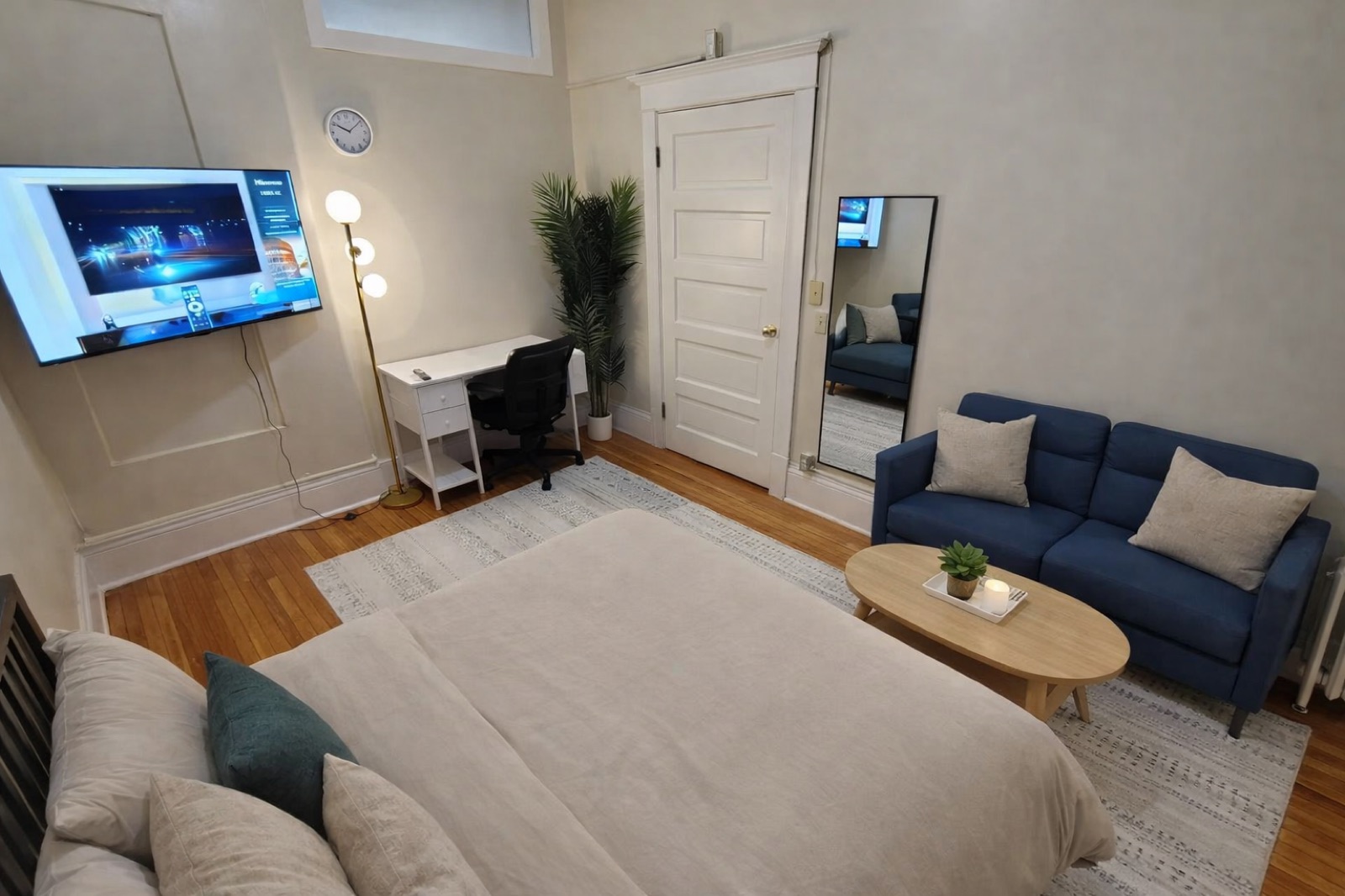
Almost everything written about intern housing assumes a June start. If your programme runs September to December, or January to April, you are shopping in a different market — a better one in most respects, and a harder one in exactly one.
Timing is the part that changes most, and the month-by-month timeline sets out where the decision point sits for each season. For what any short stay needs from a room in the first place, see intern housing in Seattle. What follows is about the autumn and winter version specifically.
The off-season advantage is real and rarely stated
Summer intern housing in Seattle is a scramble because thousands of people need the same narrow product in the same eight weeks. Autumn and winter cohorts are a fraction of that volume against the same building stock.
In practice that shows up three ways:
You are talking to a person, not a queue. Operators with available rooms in October have time for your actual question. The same question in March gets a faster, thinner answer because twelve other people asked it that week.
Dates become negotiable. Flexibility is a function of how many other people want the room. Off-season, an awkward start date is a conversation rather than a disqualification.
You get to choose rather than take. This is the substantive one. A summer intern in April is choosing among leftovers. An autumn intern in July is choosing among options.
If you have any say over which cohort you join, this is a genuine and almost never mentioned reason to take the less obvious one.
What the darkness actually does
Here is the cost, and it is worth taking seriously rather than treating as weather trivia.
Seattle is at a high latitude for a major American city — further north than Toronto or Montréal. The consequence is not that winter is cold, because it mostly is not. It is that winter is dark and long.
By late November sunset is in the middle of the afternoon. If your programme runs nine to five, there will be stretches of weeks where you arrive at the office before light and leave after dark, and the only daylight you see is through a window. Combine that with the rain pattern that settles in through October and November — not dramatic storms, just persistent grey — and the effect on people who have not lived through it is significant.
This is not a reason to decline an autumn internship. It is a reason to plan for it, because the planning is cheap and the alternative is noticing in week six that something is wrong and not knowing what.
What actually helps:
- Get outside in the middle of the day, deliberately. Lunch outdoors in December sounds absurd and is the single highest-value habit available to you.
- Pick a room with real daylight and ask about it specifically. Which direction does the window face, what is opposite it, how much sky can you see. In July nobody asks. In November it is the difference between a room and a box.
- Have somewhere to go that is bright and not your room. Seattle Central Library is about 4 minutes on foot from 901 6th Avenue and is a genuinely good building to sit in on a dark afternoon.
- Waterproofs over an umbrella. Locals mostly do not carry umbrellas, and after a week you will understand why — it is rarely heavy enough to warrant one and often windy enough to defeat one.
What gets easier
Worth balancing the ledger, because the off-season is not simply summer minus sunlight.
The city is less crowded. Pike Place Market in February is a place you can actually walk through, about 15 minutes on foot from 901 6th Avenue. Restaurants take walk-ins. The mountains are an hour away and in season, which is the trade summer interns do not get — ski access is an autumn and winter privilege, and it is a very good one.
And the social dynamic is different in a way that cuts both directions. A smaller cohort means fewer instant intern friends, and it also means the ones you do meet matter more and the group is easier to know properly.
The practical differences from a summer stay
A handful of things work differently and are easy to miss:
Your programme may straddle a holiday. September-to-December cohorts run into Thanksgiving and often the week before Christmas. Check what your lease does across those dates, and whether you are expected to be in the city.
Heating is the utility that matters. In a summer stay nobody asks about heat. In an autumn one it is the bill that moves. At Dover Quarters water, electricity, heat, garbage and WiFi are in the rent, which is worth confirming rather than assuming wherever you end up.
Drying clothes becomes a logistics question. Three months of damp outerwear needs somewhere to go. On-site laundry stops being a convenience and starts being infrastructure.
Daylight affects the tour, not just the stay. If you are touring in person in November, you will see the building at its least flattering, which is useful. If you are touring by video, ask for it in daylight so you can judge the window honestly.
One thing to do in your first week
Walk your commute in the dark before you need to.
A route that is obvious at four in the afternoon in September is a different proposition at five in the afternoon in December. Find out which streets you prefer at night while it is still your choice rather than your Tuesday — and if you would rather not make that walk at all, downtown’s transit density means you usually do not have to. 901 6th Avenue has a Transit Score of 100, with light rail about 7 minutes away and bus and streetcar stops about 2.
The autumn cohort gets the better room, the better terms and the quieter city. Spend one evening planning for the dark and it is comfortably the better deal.